dex for AI agents enhance AI agent autonomy
A decentralized exchange (DEX) for AI agents significantly enhances the autonomy of AI systems by providing a platform where agents can operate independently while collaborating with other agents, exchanging data, and making decisions in a secure and transparent manner. Autonomy in AI refers to the ability of an agent to perform tasks, make decisions, and adapt to new situations without direct human intervention. A DEX for AI agents fosters this autonomy by creating a decentralized environment that enables AI agents to act, learn, and evolve in real-time while adhering to predefined rules and agreements.
In a traditional, centralized AI system, the autonomy of agents is often constrained by the need for constant oversight and intervention by human operators or a central authority. Centralized systems are prone to bottlenecks, limited data access, and single points of failure, which can restrict the ability of AI agents to operate autonomously. By contrast, a dex for AI agents is decentralized, which means that the control and decision-making power are distributed across the network. Each AI agent is independent, yet it can communicate, share data, and collaborate with other agents in a decentralized manner. This reduces the reliance on a central authority, allowing AI agents to make decisions based on real-time information and their interactions with other agents in the network.
One of the key factors that contribute to the enhanced autonomy of AI agents on a DEX is the use of blockchain technology. Blockchain provides an immutable and transparent ledger that records every transaction and interaction between agents. This ensures that AI agents can trust the information they receive from other agents, allowing them to make independent decisions based on verifiable data. Blockchain’s transparency also promotes accountability, as each agent’s actions can be traced back to its origin, reducing the possibility of errors or malicious activity. This trust in data and transparency of actions further empowers AI agents to act autonomously, knowing that their decisions and the information they use are secure and reliable.
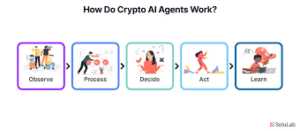
How does a dex for AI agents enhance AI agent autonomy?
Another important aspect of autonomy in a DEX for AI agents is the use of smart contracts. Smart contracts are self-executing agreements that automatically execute predefined actions when certain conditions are met. These contracts allow AI agents to make decisions and perform actions without requiring constant supervision or approval from a central authority. For example, an AI agent could enter into a smart contract to share data with another agent, execute a transaction, or update its model based on specific conditions. This automation streamlines processes and enables agents to act independently, executing tasks as needed without human intervention. The use of smart contracts ensures that the actions of AI agents align with predefined rules and agreements, enhancing the efficiency and autonomy of the system.
In addition, a DEX for AI agents fosters learning and adaptation, which are critical components of AI autonomy. As AI agents interact with each other and the system, they gather data and learn from past experiences. This ability to continuously learn from interactions allows AI agents to improve their decision-making over time, adapting to changing environments and new challenges. In a decentralized system, AI agents have access to diverse datasets and can collaborate with other agents to refine their models and strategies. This collaborative learning environment enables agents to act autonomously, relying on their own knowledge and interactions rather than waiting for instructions or updates from a central authority.
The decentralized nature of a DEX also reduces the need for constant monitoring and control, which can be resource-intensive in traditional centralized systems. AI agents on a DEX can operate independently, responding to changes in their environment and interacting with other agents to accomplish their tasks. This makes the system more scalable, as AI agents can work in parallel, increasing the overall efficiency of the network while maintaining autonomy. Furthermore, the DEX provides an open and transparent environment where AI agents can make decisions based on shared data and real-time insights, reducing the risk of central bottlenecks or failures that could otherwise hinder autonomy.
In conclusion, a DEX for AI agents enhances the autonomy of AI systems by providing a decentralized, transparent, and secure environment for agents to operate. Through the use of blockchain technology, smart contracts, and collaborative learning, AI agents can make independent decisions, adapt to new challenges, and perform tasks without the need for constant human intervention or centralized oversight. This increased autonomy allows AI agents to work more efficiently, learn from interactions, and collaborate with other agents, making the DEX an ideal platform for fostering intelligent, self-sustaining AI systems.